
Helpful New FDA Tool for CFPMs to Track Outbreaks

Helpful New FDA Tool for CFPMs to Track Outbreaks

Estimated reading time: 2 minutes

Sometimes, major foodborne illness outbreaks, like those involving romaine lettuce over the past few years, grab national attention, but more often than not these outbreaks fly under the radar of the average certified food protection manager. Unwittingly serving ingredients that have been tainted is a real danger in the food industry, so is there any way that CFPMs can keep track of widespread foodborne illness risk?

Helpful New FDA Tool for CFPMs to Track Outbreaks
Image credit: Dmytro Sidelnikov via 123rf

FDA Tool for CFPMs to Track Outbreaks

Thanks to a recently developed FDA tool, certified food protection managers (CFPMs) can periodically check the latest news regarding widespread outbreaks. This tool makes it easy to find the information you need to know about tainted product that may have been widely distributed. From this chart, you can find:

  • Item contaminated
  • Investigation status
  • Links to advisories
  • Whether a recall has been initiated

Just one quick look will tell certified food protection managers if ingredients in their inventory have been subject of an outbreak investigation, and with a few clicks you can even see where the actual product came from and if it’s been recalled.

Besides FDA outbreak and investigation information, you can easily access CDC and FSIS outbreak incidence reports. Before the FDA developed this resource, you’d have to search all three agencies’ sites for all the intel concerning large outbreaks in the United States. Multi-agency information is now conveniently available at certified food protection managers’ fingertips.

Is having easy access to foodborne illness outbreak information something you find helpful in keeping the food you serve safe?

Food Safety Training and the use of Hand Sanitizers

Food Safety Training Hand Sanitizes

The FDA recently issued a warning letter to the makers of Purell sanitizer asking them to stop claiming their sanitizer kills norovirus, Ebola, influenza and other viruses. If you read the report closely, you’ll find that the FDA never said that sanitizers don’t kill these viruses, there just isn’t the scientific study to back up Purell’s claims. In light of this warning, how should we adjust our food safety training to teach food service employees the proper use of hand sanitizers?

Food Safety Training Hand Sanitizes
Image credit: Anna Earl on Unsplash

Hand Sanitizers and Food Safety Training

When delving into this topic, it’s important to start off with one vital truth:

Hand sanitizers are not a substitute for handwashing.

When discussing food safety protocols with your staff, it’s important that they understand proper handwashing is the most effective way to kill germs and prevent the spread of foodborne, viral and bacterial illness. While hand sanitizers may advertise that they kill viruses and bacteria, they can never take the place of handwashing. So is there any instance where hand sanitizers or antiseptics are allowed in the kitchen?

While the Minnesota food code is adamant that sanitizers are not an effective replacement for handwashing, they do allow for the use of sanitizers in the kitchen.

Foodservice workers can use antiseptic gels or liquids after they have washed their hands properly. This can add an extra layer of protection, but only when used properly after a good handwashing. They should never be used before handwashing, or when timing makes the washing of hands inconvenient. Remember, handwashing should never be inconvenient, and paying close attention to handwashing habits will help prevent the spread of foodborne illness.

When it comes to the norovirus, the flu or Ebola, it’s always good practice to teach proper handwashing techniques that can be used at work or at home.

The Problem with the Hard-Boiled Egg Recall for ServSafe Managers

Hard-Boiled-Egg-Recall

Recently, a listeria outbreak lead to a major recall of hard-boiled eggs produced by a company that supplies their product to restaurants, food processors and retailers. We’ve looked into this recall, and it appears that while some of these precooked hard-boiled eggs did make their way to grocery store shelves, most of them were shipped to food service establishments, and in some cases food preparers that have used these eggs as ingredients in other prepackaged ready-to-eat products. These kinds of recalls send up a red flag for us since ready-to-eat food recalls tend to escape the notice of ServSafe managers.

Hard-Boiled Egg Recall

Image credit: Wikimedia Commons

ServSafe Managers and the Hard-Boiled Egg Recall

One of the biggest issues with the recall of a product such as pre-cooked hard-boiled eggs is awareness. Most of the recalls that draw the attention of ServSafe food managers involve raw product such as romaine lettuce, ground meats and other items used as ingredients. These outbreaks are usually wider spread and grab national headlines.

As stated in the FDA report, one major component of this recall included eggs shipped in five-pound containers for use in foodservice. Many operations bring in already cooked hard-boiled eggs as a time saver if they include whole eggs as part of breakfast service or prepare menu items made from hard-boiled eggs. The extent of this recall should be a wakeup call that foodservice professionals must be more vigilant with all ready-to-eat product they bring in to serve to guests and use as ingredients for certain recipes.

If you use precooked product in your establishment, you should frequently take a look at the FDA’s recall list. While many recalls of ready-to-eat food involve products shipped directly to grocery stores and consumers rather than food service businesses, there are times when contaminated prepared product ends up in industrial kitchens. Awareness and keeping alert for any recall will help prevent the spread of foodborne illness outbreaks.

Do you use already prepared product in your business?

Another Romaine Recall Affects Certified Food Protection Managers

Recall Effects Certified Food Protection Managers

Here we go again. Near the end of November, the CDC reported 40 people in 16 states have fallen ill due to E.coli found in romaine lettuce grown in the Salinas growing region in California. Due to the vast amount of lettuce grown in this region, the FDA strongly urged consumers to dispose of all romaine in any form if there was any uncertainty as to where the lettuce was grown. This means that grocery stores, foodservice suppliers and restaurants were unable to use whole heads of romaine, hearts of romaine, chopped romaine or salad mixes that contain romaine. This left a multitude of affected certified food protection managers scrambling to find alternatives, especially considering the recall occurred just before a very busy Thanksgiving week.

Recall Effects Certified Food Protection Managers
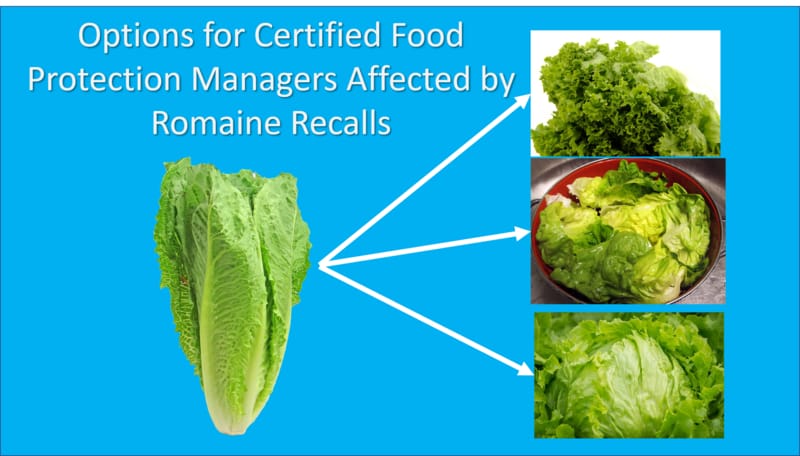
Image credit: BlackRiv, Bruno Glätsch, Pezibear from Pixabay and Anita Hart from Flickr

Romaine Alternatives for Affected Certified Food Protection Managers During Recall

Romaine is a staple in the food industry. Due to its crisp texture and traditional use in Caesar salads, it’s always heavily in demand, but what can CFPMs do when it’s suddenly unavailable?

First thing certified food protection managers must do is inform guests that romaine lettuce is unavailable. This can be as easy as including a notice in your menus or in a visible location before guests are seated or served. Many guests may not follow the news and may have a negative reaction to being served a different type of product than what is listed on your menu.

Secondly, you may want to find as close of an alternative as possible. With the latest recall happening just before Thanksgiving, we’ve heard stories from foodservice professionals that even other forms of lettuce had become scarce due to demand for a romaine replacement and an abundance of caution concerning all produce from the Salinas growing region. While nothing really has the crunch and flavor of romaine, there are a few potential alternatives:

  • Iceberg Lettuce
  • Butter Lettuce
  • Green Leaf Lettuce
  • Leafy Greens

Of the above alternatives, none will have the crunch factor of a crisp romaine heart, but iceberg, butter and green leaf varieties of lettuce will still have similar flavors and could provide an adequate substitute until romaine once again available. We’ve heard of some certified food managers thinking outside the box and replacing some menu items with different salads containing leafy greens such as kale, bok choy and spinach.

We’re interested in how certified food protection managers have been affected by recent romaine recalls. What alternatives did you use during the latest romaine recall?