Food Safety Training and Further Study Into E.coli Contaminated Romaine

New Study Into E.coli Contaminated Romaine

E.coli outbreaks linked to romaine from Arizona made headlines on multiple occasions over the past two years. The link between E.coli and romaine has been the most talked-about story in the food safety training community, and the causes of the outbreaks still continue to be investigated. Now, academia has gotten involved as researchers from the University of Arizona have partnered with the FDA on a multi-year study of E.coli contaminated romaine from one of the growing regions linked to past outbreaks.

New Study Into E.coli Contaminated Romaine

Goals of an Extended Study of E.coli Contaminated Romaine Growing Regions

Due to the massive scale of the previous outbreak, food safety officials and growers alike are eager to get to the bottom of why outbreaks happen and how to prevent them in the future. The extension scientists from the University of Arizona have a few goals in mind with this extended study.

  • Assess potential sources of contamination
  • Examine the prevalence of contaminates from one growing season to the next
  • To provide recommendations for advanced food safety training

There have been numerous theories as to how E.coli has made its way into the Yuma growing fields. Contaminated water, poorly cleaned harvesting equipment and even flies have been suggested as a cause of recent outbreaks. Hopefully, researchers can isolate a cause and help prevent the transfer of pathogens in these fields again.

One of the advantages of a multi-year examination is that researchers will be able to see what happens from one season to the next. This could help identify whether this is an ongoing issue with the region that requires drastic action or if previous outbreaks were due to isolated incidents. Once these issues are addressed, these researchers and the FDA hope to have extensive food safety training recommendations for romaine producers in Arizona and throughout the agricultural community around the country.

Do you think there’s been enough effort put into examining the link between romaine growing regions and E.coli outbreaks?

FDA Requesting ServSafe Managers Input For Food Safety Changes

FDA Requesting ServSafe Managers Input For Food Safety Blue Print

The FDA recently issued a public statement offering ServSafe food managers and other professionals in the food industry the chance to participate and comment on a meeting titled “A New Era of Smarter Food Safety.” We think this is an incredible opportunity to learn about the FDA’s blueprint for the future of food safety.

FDA Requesting ServSafe Managers Input For Food Safety Blue Print
Image Credit: US Food and Drug Administration

FDA Smarter Food Safety Forum and ServSafe Manager Input

The FDA’s public meeting is scheduled to take place in Maryland on October 21st. If you’re interested in attending but unable to travel to MD with only a week’s notice, the FDA has set up a method for the public to attend via online webcast. This webcast will be free to view, all you have to do is submit your registration via an online form.

According to the release, the FDA plans on discussing:

  • The role of digital technology in tracing the origin of contamination
  • Making preventative controls more effective and efficient
  • Food safety challenges of evolving business models
  • Leveraging proven organizational models to enhance compliance with food safety practices

While a lot of the issues that are being discussed appear to be with what happens with food before it reaches the restaurant and food production sector, it’s quite interesting to see where the FDA plans on taking food safety in the future. All four of these major topics could change inspection procedures and stop outbreaks before they start by quickly finding the source of contamination and preventing it from even happening in the first place.

Once the seminar has been completed, a full transcript of the event will be made available on an updated events page. After the transcripts have been released, ServSafe food managers and the public will have a month to comment electronically or by mail. For more information on agendas for these events and how to provide comments and feedback once the meeting has concluded, check out the FDA’s official request for public comment.

We’ll provide an update on topics covered and explore the commenting process once more information is available.

For quick reference, here are links to important information:

Do you like the idea of the FDA being more open and allowing the ServSafe managers and the public to view and comment on these food safety related sessions?

The Safe Food Act and Streamlining National Food Safety

Safe Food Act

Currently, the responsibility of food safety oversight of food products imported, grown and produced in the United States is split between 15 different agencies. In late June, Sen. Dick Durbin (D-IL) and Rep. Rosa DeLauro (D-CT) have once again introduced their Safe Food Act, a bill that aims to streamline federal food safety operations by consolidating these 15 agencies into a single, independent agency. This week, we’ll explore this bill and briefly summarize how the current federal food safety process works.

Safe Food Act
Image Credit: https://www.sketchport.com/user/149001/shelly

New Safe Food Act Details

The bill itself is 81-pages long and chock full of complex language, but we can pull out a few highlights to summarize what this bill intends to accomplish.

  • Establish a single food safety agency
  • Improve the import inspection process
  • Require product traceability to quickly identify the source of outbreaks
  • Develop data sharing to learn more about outbreaks and foodborne illness

The sponsors of this bill are concerned that the current food safety system is too fragmented to be incredibly effective. The FDA and USDA are responsible for different aspects of regulation and inspection while the CDC also becomes involved in the event of an outbreak. There are also several sub-agencies that are involved in the overall process. The lawmakers feel that consolidating these agencies will put all of the information at the fingertips of one agency reducing gaps in coverage.

With numerous outbreaks occurring from product from out of the country, the Safe Food Act aims to improve the inspection process of foreign product before contaminated food reaches the market.

Finally, this bill will aim to provide a system to learn more about foodborne illness outbreaks. If the source of an outbreak can be traced quickly, product can be recalled and removed faster than under the current system. Data tracking and sharing also gives greater insight that can be used to counter the effects of outbreaks in the future.

This isn’t the first time lawmakers have suggested consolidating all of the federal food safety agencies under one roof. The Safe Food Act was previously introduced by these same senators in 1999, and the White House called for the simplification of the food safety inspection and outbreak prevention process in 2018.

Do you feel a consolidated food safety agency will reduce foodborne illness, or do you believe multiple agencies provide us better protection?

Improving the International Food Safety Inspection Process

food safety inspection process

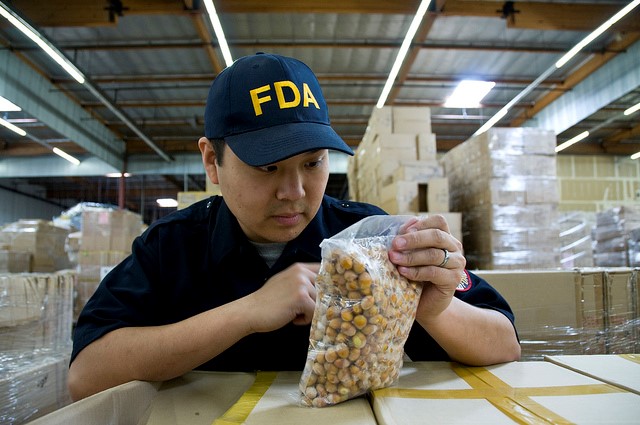
In a complex global supply chain, the task of keeping unsafe product from reaching customers and food producers in the United States is a daunting and seemingly impossible task. The FDA has recently released their new food safety inspection process strategy for keeping unsafe product from reaching our shores.

food safety inspection process
Image credit: FDA photo by Michael J. Ermarth

Global Strategy To Improve Food Safety Inspection Process For Imported Product

With a new strategy in mind, the FDA has outlined four goals for the future of foreign food inspection:

  • Coordinating with foreign food safety inspectors
  • Detecting and refusing tainted goods before entry into the U.S.
  • Develop targeted sampling and testing of high-risk product
  • Develop and improve a global inventory of farms and food producers

Coordinating with other countries comparable food safety inspection process will provide an extra layer of protection before food leaves the country or origin. These local inspectors will be able to do a more thorough inspection, and their knowledge of food producers goes a long way to preventing tainted product from leaving their country in the first place. The FDA currently works with food safety inspectors in Canada, New Zealand and Australia. Negotiations are underway with officials in the European Union.

The FDA’s plan to upgrade the screening process upon entry will do a better job of identifying product that could be contaminated. This process will involve new foreign supplier verification, accredited third party audits and several other updated and more efficient systems. Along with this process will be the collection of data to target suppliers of high-risk products such as soft cheeses and seafood.

The final step in the updated food safety inspection process will involve an inventory or database of overseas producers that ship their product to the United States. This will identify producers who have previously shipped tainted product, isolate high-risk farming regions and provide food safety inspectors with more information than they’ve had in the past.

We like to see our national food safety inspection process evaluated and updated to provide safer product. Do you feel this new FDA strategy will keep product imported from foreign countries safer?